Dr. Arnab Karmakar
For Surgery Related Query: +91 9830491377 | For Appointment: +91 8240136591
Dr Arnab Karmakar

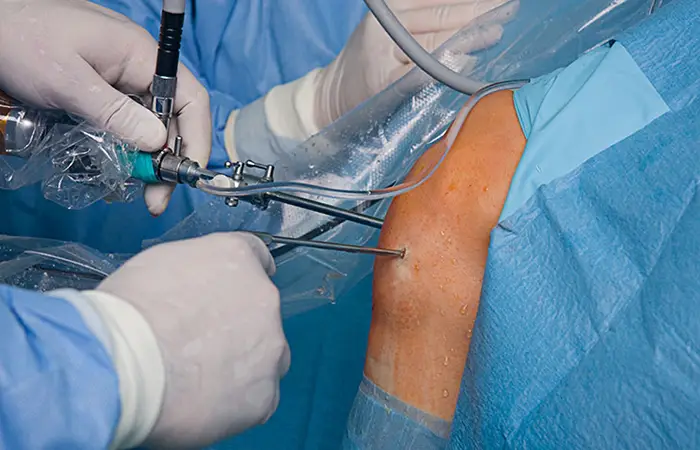
Arthroscopy (ahr-THROS-kuh-pee) is a procedure for diagnosing and treating joint problems. A surgeon inserts a narrow tube attached to a fiber-optic video camera through a small incision — about the size of a buttonhole. The view inside your joint is transmitted to a high-definition video monitor.

Arthroscopy allows the surgeon to see inside your joint without making a large incision. Surgeons can even repair some types of joint damage during arthroscopy, with pencil-thin surgical instruments inserted through additional small incisions.

More About Arthroscopic Surgeries

Doctors use arthroscopy to help diagnose and treat a variety of joint conditions, most commonly those affecting the:

  • Knee
  • Shoulder
  • Elbow
  • Ankle
  • Hip
  • Wrist

Diagnostic procedures

Doctors often turn to arthroscopy if X-rays and other imaging studies have left some diagnostic questions unanswered.

Conditions treated with arthroscopy include:

  • Loose bone fragments
  • Damaged or torn cartilage
  • Inflamed joint linings
  • Torn ligaments
  • Scarring within joints

Arthroscopy is a very safe procedure and complications are uncommon. Problems may include:

  • Tissue or nerve damage. The placement and movement of the instruments within the joint can damage the joint’s structures.
  • Infection. Any type of invasive surgery carries a risk of infection.
  • Blood clots. Rarely, procedures that last longer than an hour can increase the risk of blood clots developing in your legs or lungs.

Exact preparations depend on which of your joints the surgeon is examining or repairing. In general, you should:

  • Avoid certain medications. Your doctor may want you to avoid taking medications or dietary supplements that can increase your risk of bleeding.
  • Fast beforehand. Depending on the type of anesthesia you’ll have, your doctor may want you to avoid eating solid foods eight hours before your procedure.
  • Arrange for a ride. You won’t be allowed to drive yourself home after the procedure.
  • Choose loose clothing so you can dress easily after the procedure.

The type of anesthesia used varies by procedure:

  • Local anesthesia: You’ll be awake, but only feel pressure.
  • Regional anesthesia: Numbs the lower body, you remain awake.
  • General anesthesia: You are unconscious during the procedure.

One small incision is made for the viewing device. Additional small incisions allow insertion of surgical tools.

Your aftercare may include:

  • Medications to relieve pain and inflammation
  • R.I.C.E (Rest, Ice, Compress, Elevate)
  • Use of splints or crutches
  • Physical therapy and rehabilitation

Call your surgeon if you develop:

  • A fever
  • Pain not helped by medication
  • Drainage from incision
  • Redness or swelling
  • Numbness or tingling

In general, you should be able to resume desk work and light activity in a few days. Driving may be possible in one to three weeks. Full recovery depends on your condition.

Your surgeon will review findings and monitor progress during follow-up visits.

WhatsApp